Breaking News: OpenCode Quiz Launches to Assess AI-Assisted Python Coding Proficiency
A new interactive quiz is now challenging Python developers to demonstrate their expertise in using OpenCode for AI-assisted coding. The assessment, released today, tests practical knowledge of installing OpenCode, connecting it to AI providers, and configuring project context with AGENTS.md files.
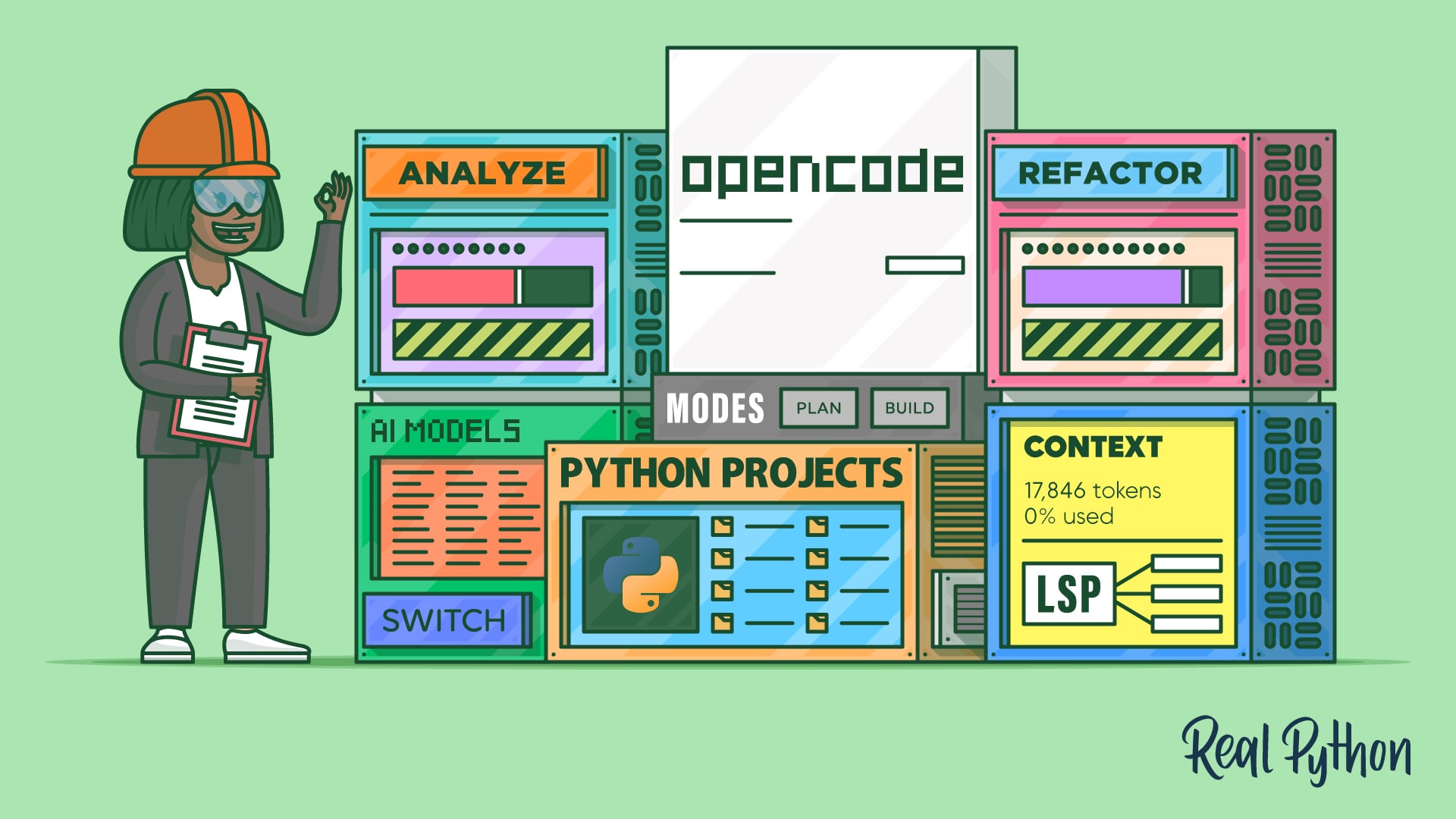
Developers must also prove they can leverage advanced features like mid-session model switching and built-in language servers. The quiz is part of a broader learning path titled 'Python Coding With AI' aimed at modernizing development workflows.
Industry Reaction
“OpenCode represents a significant shift in how Python developers approach coding with AI,” said Dr. Jane Smith, AI coding specialist and lead instructor at CodeAI Academy. “This quiz not only validates skills but highlights the growing necessity of AI integration in everyday development.”
Another expert, Mark Davis, senior developer at TechForward, emphasized: “Mastering tools like OpenCode can cut boilerplate code generation time by 40%. Quizzes like this help the community stay competitive in an AI-first job market.”
Background
OpenCode is an open-source interface that bridges Python development environments with large language models. It allows developers to install the tool via pip, authenticate with AI providers (such as OpenAI or local models), and define project-specific instructions using an AGENTS.md configuration file.
The tool also supports real-time model switching during a session, enabling rapid experimentation without restarting the coding environment. Integrated language servers provide linting, autocompletion, and error checking, making AI-assisted coding more robust.
What This Means
This quiz signals a maturation of AI coding tools from experimental to essential. Developers who pass the OpenCode quiz demonstrate they can harness AI for code generation, debugging, and optimization—skills increasingly demanded by employers.
The quiz also serves as a stepping stone to the full Python Coding With AI learning path, which covers advanced topics like prompt engineering and CI/CD integration. As AI becomes ingrained in development, such assessments will likely become industry benchmarks.
Quiz Structure
The quiz comprises multiple-choice and practical simulation questions. Topics range from basic installation steps to configuring file-based context and handling API rate limits. Each question includes immediate feedback, reinforcing learning.
Participants receive a score summary and can retake the quiz to improve. Results can be shared on LinkedIn or GitHub to showcase proficiency.
Next Steps for Developers
Developers interested in taking the quiz can access it via the official Python Coding With AI portal. The site also offers a free Python Tricks newsletter for ongoing tips. “The quiz is just the start,” said Smith. “We encourage developers to practice with real projects and then revisit the assessment.”